Counting the Whole Pound: A Practical Cost Framework for Modular and Traditional Commercial Builds

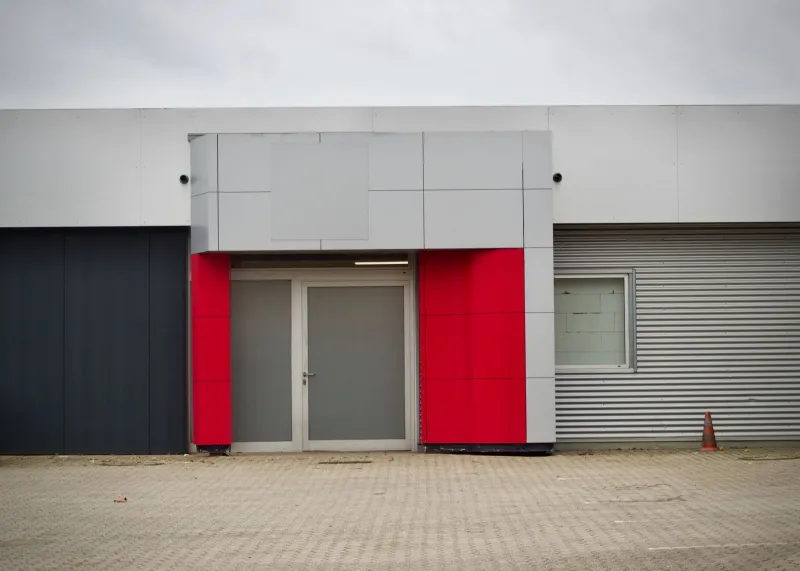
Photo: Jaggery , CC BY-SA 2.0, via Wikimedia Commons
For UK business leaders comparing construction routes, the headline price is understandably influential. Yet the choice between modular and traditional construction is rarely settled by a single number. As of 2026, both approaches are being shaped by volatile material costs, tighter energy expectations, constrained sites and the need to bring space into use quickly. The useful question is not whether modular is cheaper in principle, but whether it is cheaper for a particular project after programme, risk and whole-life costs are counted.
Start with a like-for-like scope
Any meaningful comparison begins with the same scope. The two options should deliver the same floor area, specification, building performance, external works, services and fit-out standard. This sounds obvious, but it is where many comparisons fail. A modular quotation may include factory fit-out but exclude groundworks, crane access, utility connections or landscaping. A traditional estimate may exclude design fees, contingency or final commissioning. If those gaps are not closed, the comparison is not between buildings but between different assumptions.
The first practical step is therefore to produce a common scope document. It should list what is included, what is excluded and who carries each risk. Only then can a client judge whether the modular option is genuinely offering more, less or simply a different allocation of cost.
The upfront price is only the opening line
Modular construction can carry a factory premium, particularly where high specification or complex design is involved. It can also reduce site labour, preliminaries, weather-related delay and the duration for which site management is required. Traditional construction may appear cheaper at tender, but the apparent advantage can narrow once site overheads, temporary works and programme risk are added.
Rather than relying on a single tender figure, clients should request an open-book breakdown covering design, manufacture, transport, craneage, installation, groundworks, services, fit-out, professional fees and contingency. This allows the cost of speed to be separated from the cost of the building itself. It also makes clear where a modular supplier is taking risk and where the client remains exposed.
Groundworks are not a footnote
Groundworks deserve particular attention. Foundations, drainage, service connections, site levels, access roads and crane standing areas can vary significantly between sites. Modular buildings often require precise tolerances and adequate delivery access, while traditional construction may absorb site constraints differently over a longer programme.
These costs are not necessarily higher for modular projects, but they are frequently underestimated. A site that looks straightforward on a plan may require reinforcement, retaining structures or utility upgrades. The comparative model should include a groundworks allowance developed from site investigation information, not a provisional sum carried at the bottom of a quotation.
Programme savings have a cash value
Faster delivery is one of modular construction's most cited benefits, but speed only has financial value where it produces a measurable benefit. Earlier occupation can reduce rent on interim space, shorten site overheads, bring forward revenue or avoid penalty costs. For some occupiers, however, the operational need is not urgent and the value of a shorter programme is modest.
The practical approach is to convert programme into cash. Estimate the daily or weekly value of earlier completion, then test whether the modular premium, if any, is justified by that value. This also highlights dependencies outside the factory, such as planning consent, groundworks, utility connections and fit-out. A modular programme can only deliver its advantage if those workstreams are aligned.
Fit-out and services can change the answer
Modular buildings are sometimes described as plug-and-play, but commercial workspaces rarely are. Mechanical and electrical connections, data infrastructure, fire safety, accessibility, security and furniture all require coordination. Factory fit-out can reduce on-site trades and improve quality control, but it also tends to require earlier design freeze. Late changes can be more expensive than in a traditional build.
Clients should compare fit-out on the same specification and consider how much change they expect after contract award. If the organisation needs to adapt layouts late in the process, a traditional route may offer more flexibility, albeit with its own cost consequences. If the specification is stable, factory completion can reduce coordination risk and compress the on-site phase.
Whole-life value and future flexibility
Whole-life cost includes energy performance, maintenance, repairs, reconfiguration and eventual disposal or reuse. A modular building designed for demounting can offer future flexibility, but relocation is not free and residual value depends on build quality, warranty terms, transport logistics and market demand. Traditional buildings may offer longer assumed lifespans, but they can be more expensive to adapt.
The comparison should reflect the client's intended tenure. A business expecting to remain in the same location for decades may weigh durability and long-term maintenance differently from one that anticipates growth, contraction or relocation within a decade. Neither assumption is universally correct.
A practical decision framework
A disciplined comparison can be built around six questions:
- What operational need must the building satisfy, and for how long?
- Is the scope genuinely like-for-like, including external works and fit-out?
- What is the cash value of earlier occupation or reduced site time?
- Which party carries groundworks, utilities, design and programme risk?
- How likely is future reconfiguration or relocation?
- What are the whole-life energy, maintenance and residual value implications?
If speed has no operational or financial benefit, a premium for modular is difficult to justify. If site constraints are severe, modular may lose some of its advantage. If future flexibility is genuinely valuable, the calculation may favour a demountable solution. The answer depends on the project, not the label.
Conclusion
Modular construction is neither inherently expensive nor automatically economical. It is a different way of allocating cost and risk, and its commercial case stands or falls on the whole-pound calculation. For UK clients in 2026, the most robust approach is to compare identical scopes, price the exclusions, value the programme and test the assumptions against intended use. That is a less dramatic message than fast or free, but it is a more reliable basis for a commercial decision.