Rethinking the Modular Brief: Six Outdated Assumptions in UK Commercial Procurement
Photo: Sgt. Terence Brady, Public domain, via Wikimedia Commons
Modular construction still attracts a particular kind of shorthand in UK procurement: the portacabin. The comparison is understandable, because modular buildings have historically been associated with temporary site accommodation. But in 2026 it is an increasingly poor guide to what commercial buyers are actually being offered. The assumptions that surround modular procurement can distort briefs, skew comparisons and lead to poor decisions. Six of them deserve to be retired.
1. Modular means temporary
Permanent modular buildings can be designed for long service lives, with foundations, warranties and specifications comparable to traditional construction. Temporary accommodation is a product type, not a definition of the method. The relevant questions are the intended design life, the durability of the envelope, the maintenance regime and the terms of the warranty. A modular school, health facility or office can be specified for decades of use; a site cabin is specified for something else entirely.
2. Modular means low specification
Factory production can deliver tightly controlled tolerances, consistent detailing and repeatable quality. It does not guarantee a high specification, but it does not prevent one either. Acoustic performance, thermal performance, fire resistance and finishes are all specified by the client and delivered through the design process. Buyers should compare specifications line by line rather than inferring quality from the construction method. A low-spec modular building and a high-spec one may share a structural system; they are not the same product.
3. Modular is difficult to finance
Lenders have become more familiar with offsite construction, but familiarity is not uniformity. Finance depends on the quality of the proposal, the strength of the covenant, the warranty package and the exit strategy. Commercial mortgages, development finance and asset finance can all be relevant, as can lease or hire structures. The practical lesson is to engage funders early and provide clear information about the modular system, insurance, certification and future dismantling. Modular is not inherently unfinanceable; it simply requires a well-presented case.
4. Modular limits architectural ambition
The idea that modular buildings must look like boxes is out of date. Cladding, brick slips, glazing, roof forms and external landscaping can all be used to create buildings that sit comfortably in their context. The constraint is the module, not the design language. Early engagement with the modular manufacturer is important, because certain dimensions and transport limits will shape what is possible. Within those limits, the aesthetic outcome is a design choice, not a foregone conclusion.
5. Planning is automatically easier
Modular construction can offer programme certainty, but it does not bypass the planning system. Permanent buildings will usually require planning permission, and permitted development rights are limited and subject to conditions. Design quality, neighbour impact, drainage, highways and conservation areas all remain relevant. A modular scheme may reduce the time spent on site, but it does not remove the need for pre-application advice, accurate drawings and a clear planning statement. Treating planning as a formality is a common and expensive mistake.
6. Modular means no site logistics
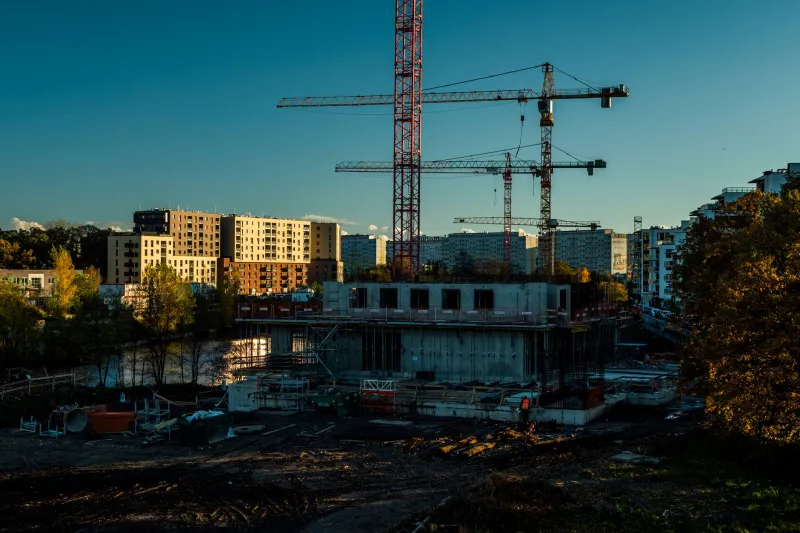
Offsite manufacture can reduce vehicle movements and shorten the construction programme, but it does not eliminate site activity. Modules must be delivered, lifted and connected. That requires crane access, transport routes, temporary compounds and a carefully sequenced logistics plan. Urban sites may have limited working hours, restricted parking or difficult approach routes. The benefits are real, but they depend on planning the interface between factory and site rather than assuming that disruption disappears.
A better basis for comparison
Retiring these assumptions does not mean accepting every claim made for modular construction. It means comparing modular and traditional options on the same terms: design life, specification, whole-life cost, carbon, programme, planning risk and exit strategy. UK buyers in 2026 have more evidence and more choice than the old portacabin shorthand suggests. The sensible approach is to ask precise questions, test the answers and specify the outcomes that matter. Modular construction is not a shortcut or a compromise by default. It is a procurement route that rewards a clear brief.