Moving On, Not Writing Off: Realising Second-Life Value in UK Modular Buildings
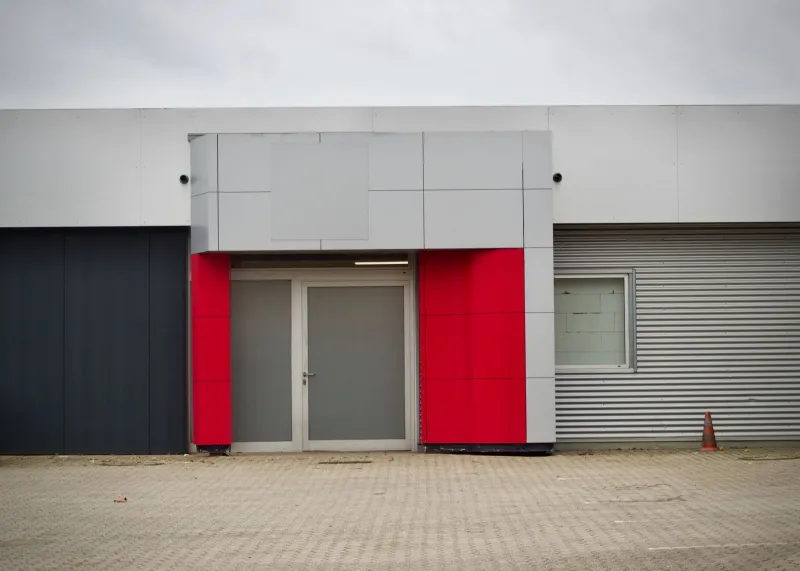
Photo: Diego Weissel Rovira, CC BY-SA 3.0, via Wikimedia Commons
Modular buildings are often discussed as a faster way to procure space. Their second-life potential is less frequently part of the boardroom conversation. That is a missed opportunity. A modular asset is not simply a construction method; it is a set of components that can, with forethought, be dismantled, moved and brought back into productive use. For UK businesses weighing whole-life cost and carbon, redeployment deserves to be designed in from the outset rather than treated as an exit-stage afterthought.
Why second-life value matters in 2026
Commercial property decisions are under pressure from several directions at once: capital scarcity, fit-out costs, energy performance, and the need to report credibly on carbon. A building that can be adapted or relocated offers an alternative to the familiar cycle of build, occupy, strip out and demolish. It also supports a more circular approach to material use, keeping structural and envelope components in service for longer.
The argument is not that every modular building will move. Many will remain in place for decades. The point is that optionality has value. A design that can be dismantled without destructive works, and documentation that allows a future owner to understand what they have bought, makes relocation, resale or reletting more realistic.
What can actually be moved
Redeployment is not a blanket promise. It depends on the system, condition and destination. Typically, the superstructure and envelope are the most reusable elements. Mechanical and electrical services may be retained, replaced or reconfigured depending on age and the requirements of the new occupier. Foundations are usually site-specific and rarely move, although pile caps and services can sometimes be designed with future removal in mind.
A successful move starts with a condition survey and a clear scope. Is the requirement to relocate the whole building, sell individual modules, or lease the asset to another party? Each route has different implications for transport, cranage, statutory approvals and warranty continuity.
Three routes to value
Relocation. Reusing the building on another site in the same ownership can preserve operational continuity and avoid the cost and carbon of a new structure. It works best when the module grid, floor-to-floor heights and service strategy are documented and when the new site can accommodate deliveries and lifting.
Resale. A second-hand modular building can be attractive to occupiers who need space quickly or to specialist traders who refurbish and reoffer modules. Value depends on condition, specification, certification and the cost of making good.
Leasing. Modular hire and lease structures can turn a capital asset into a more flexible occupancy cost. For businesses with uncertain headcount or lease terms, this can be a practical way to align space with demand, provided the exit terms and reinstatement obligations are understood.
Whole-life cost and carbon
The financial case for redeployment is rarely about a single headline saving. It is about avoided costs: demolition, waste disposal, new foundations, new structure and new envelope. Those avoided costs must be weighed against dismantling, transport, re-erection, adaptation and any loss of value through wear and tear.
The carbon case follows a similar logic. Reusing an existing structure keeps embodied carbon in service. That benefit can be eroded by transport distances and new materials, so it should be assessed rather than assumed. For many UK projects, however, the ability to retain a significant proportion of the original asset is a material advantage in whole-life carbon terms.
Designing for the move before it happens
Redeployment is easiest when it is designed in. That means thinking about standard module sizes, accessible connections, service isolation points and realistic tolerances. It also means keeping the information that a future project team will need: as-built drawings, operation and maintenance manuals, fire strategy, warranty details and a record of any modifications.
Commercial and planning arrangements matter too. Site tenure, lease length, permitted development rights and the likelihood of future planning consent all affect whether a move is credible. A building that is technically demountable may still be commercially fixed if the site cannot be redeveloped or the lease does not allow it.
A more circular commercial model
The second-life value of modular buildings is not automatic. It is created by design choices, documentation and commercial foresight. For UK businesses, that means treating redeployment as part of the investment case rather than a contingency. The dividend is not only financial. It is the ability to keep useful space in use, reduce waste and respond to changing operational needs without starting from scratch.