Tenancy by Design: Modular Buildings Where Someone Else Holds the Freehold
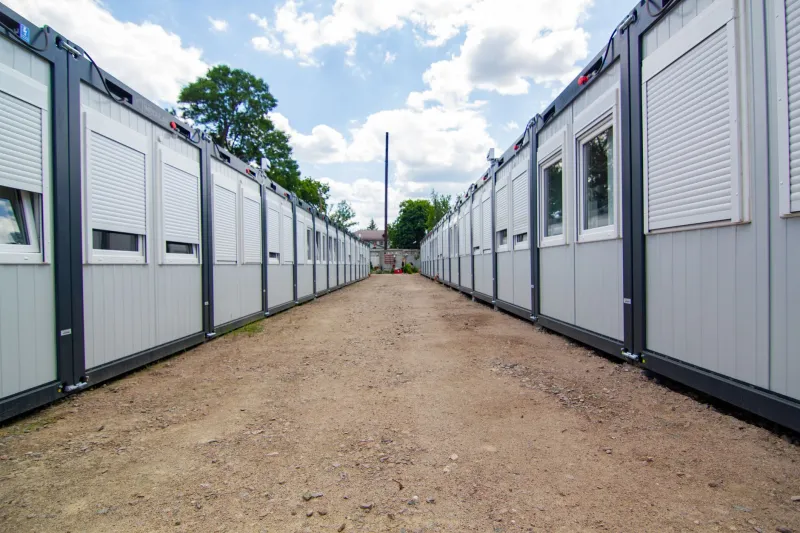
Modular construction is often presented as inherently flexible because the building can be taken away. On a leased site, that flexibility is only as good as the lease, the landlord's consent and the site works that surround the units. A demountable building on rented land is not a temporary structure by default; it is a commercial asset sitting inside a legal and physical framework that will determine whether it can be adapted, financed or removed without penalty. The sensible approach is to treat the lease as part of the design brief from the outset.
Begin with the lease, not the unit
On a freehold site, the main questions tend to be planning, access and buildability. On leasehold or tenanted land, a further layer applies before those matters can be settled. The lease will set out the permitted use, the landlord's consent regime for alterations, the arrangements for access and services, and the obligations that fall due at the end of the term. A modular building may be less invasive than a traditional extension, but it is still an alteration to the site and usually requires formal consent.
Early dialogue with the landlord is therefore practical rather than merely procedural. A licence to alter, or an equivalent consent, should be discussed before the design is fixed. Landlords and their advisers will want to understand the footprint, the foundation solution, the utility connections, the duration of the works and the condition in which the site will be returned. Where the lease is silent or ambiguous, those points should be resolved in writing rather than left to be discovered at handover. Consent conditions can affect programme and cost as surely as crane access or ground conditions.
Matching building life to lease term
Modular buildings are frequently procured on the basis of a long service life, but the commercial case on a leased site depends on how that life aligns with the remaining term. A building expected to remain for fifteen years is difficult to justify where the lease has five years to run and no realistic prospect of extension. Conversely, a short lease does not automatically rule out a quality modular building, provided the investment is structured around a clear exit.
Break clauses, rent review dates, extension options and any restrictions on assignment should all be reviewed alongside the proposed building. The aim is not simply to calculate payback over the initial term, but to understand what happens if the occupier needs to stay longer, vacate earlier or transfer the building to another party. Where the lease allows, a negotiated option to extend or a pre-agreed removal period can reduce the risk of an awkward overlap between lease end and dismantling works.
The site works that do not travel
The principal advantage of modular construction is that the building can be removed. The foundations, drainage, service connections, hardstanding and landscaping may not be so easily reversed. A demountable unit still requires a suitable base, safe access for delivery and installation, and connections to utilities that must be made good when the building leaves. These are the elements most likely to feature in a dilapidations discussion, and they should be designed with removal in mind.
A detailed schedule of condition at the start of the lease is valuable. It records the condition of the site before the modular building is installed and provides a basis for distinguishing fair wear and tear from reinstatement obligations. Photographs, survey notes and a clear description of existing services can prevent disagreement later. Where the landlord requires the site to be returned to a particular condition, the cost of that work should be included in the project appraisal from the beginning rather than treated as an end-of-term surprise.
Service charges, utilities and shared areas
Rented sites often involve shared access roads, communal parking, security, landscaping and utility infrastructure. The lease and service charge budget will indicate how those costs are apportioned and whether the modular building affects them. A separate utility connection may be preferable to a shared supply, but it can also introduce additional metering, maintenance and reinstatement obligations. The same applies to drainage and data connections.
Insurance is another point to settle early. The landlord's policy may not automatically cover a modular building installed by a tenant, particularly where the unit is treated as tenant's property. The respective responsibilities for insurance, repair and reinstatement should be clear before the units arrive on site. Rates and other occupational charges should also be checked against the local authority's treatment of the completed building.
Plan the exit before the first delivery
The strongest leasing advantage of modular construction is realised when removal is planned as carefully as installation. That means considering the exit route for each unit, the crane or transport arrangements required, any permits needed for temporary road closures, and the availability of a suitable receiving site or purchaser. It also means allowing enough time for dismantling, making good and any dilapidations works before the lease end.
In some cases the best exit is not removal at all. A landlord or incoming tenant may wish to retain the building, particularly where it has been integrated with site services and has a remaining useful life. A pre-agreed transfer, assignment or sale in situ can avoid unnecessary dismantling and reduce disruption. That option is far easier to secure if it is contemplated at the outset, when consent and lease wording can still be shaped around it.
A lease-led brief
The commercial case for modular buildings on rented land is credible, but it depends on treating the lease, the consent process, the site works and the exit plan as one package. Demountability is not a substitute for due diligence; it is an advantage that must be documented and designed into the project. Where those strands are brought together early, a leased site can support a high-quality modular building without leaving the occupier exposed at the end of the term.


