Seams That Hold: Interface Detailing in Linked Modular Buildings
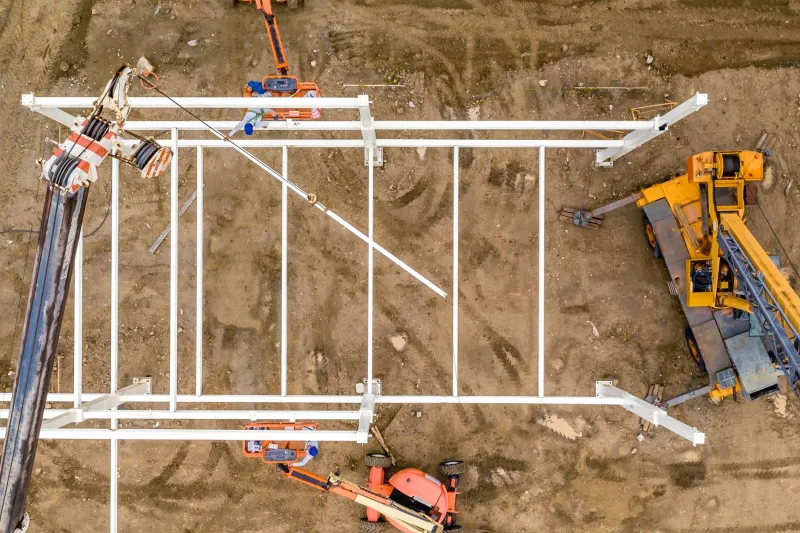
A modular brochure tends to show the box: the finished elevation, the clean internal line, the crane lift frozen mid-air. A completed multi-module building, however, is not a collection of boxes. It is a system of interfaces. The structural connection, the weather seal, the fire compartment line, the acoustic break and the service crossing are where performance is either designed or left to chance. In practice, most defects that emerge by year five are not traceable to the manufacture of a module. They are traceable to the join.
That distinction matters commercially. A client procuring a linked modular building is not simply buying repeated units; they are buying a coordinated assembly. The interfaces are the coordinating element, and they deserve the same design attention, testing evidence and contractual clarity as the modules themselves.
The interface is a designed element, not a residual gap
When two modules meet, several separate functions coincide at the same narrow zone. Structure must transfer load and accommodate movement. The envelope must shed water and manage vapour. Fire compartmentation must remain continuous across the junction. Acoustics must prevent flanking transmission. Services must cross without breaching any of the above. Each function needs a drawn detail, a specified product and a defined installer.
Tolerance is the first practical test. Every module carries manufacturing and setting-out tolerances; those tolerances accumulate across a linked run. A design that assumes nominal dimensions will produce variable gaps on site, and variable gaps invite variable solutions. The competent approach is to state the tolerance strategy explicitly: how modules are set out, how bearing and restraint are achieved, how shims and grout are specified, and how movement is accommodated rather than restrained. Differential movement between modules and any in-situ elements should be considered at the same stage.
Weathertightness follows the same logic. A single line of sealant is not a strategy. Drained and ventilated cavities, primary and secondary seals, and sealant selection appropriate to the movement and substrate are the elements that survive. Fire performance depends on continuity: linear joint seals across module boundaries should be supported by test evidence appropriate to the joint configuration, cavity barriers should be shown on the fire strategy drawings, and service penetrations should be sealed to maintain the compartment line. Acoustic performance is similarly vulnerable at junctions, where a rigid structural bridge or an unsealed penetration can undermine the performance of the separating element. Services need a crossing strategy that reconciles fire stopping, acoustic sealing, access and isolation.
What to ask to see at design stage
The purpose of a design-stage review is not to interrogate the manufacturer's product brochure. It is to test whether the interfaces have been resolved before they reach site. A client or main contractor should ask to see:
- an interface register or schedule identifying every junction type, its responsible designer and its status;
- structural connection details, including bearing, restraint, tolerance and movement provisions;
- a fire strategy drawing with joint details, cavity barriers and penetration seals cross-referenced to test evidence;
- acoustic junction details and the predicted performance of the separating construction as built, not as tested in isolation;
- the weathertightness strategy, including the proposed test regime and the sequence for closing the envelope;
- a service penetration schedule showing how each crossing is sealed and accessed;
- the maintenance and inspection strategy for joints that will need attention during the building's life;
- hold points at which interface work is inspected and signed off before it is concealed.
These are not academic requests. They establish whether the design team has treated the interface as an engineering problem or as a site conversation.
Writing responsibility into the contract
Interfaces fail commercially when they fall between packages. The module manufacturer may consider its scope complete at the module face; the site team may consider final connection to be part of the installation package; the envelope contractor may consider sealant application to be someone else's line. The result is a gap in responsibility that becomes a gap in the building.
The remedy is to define interfaces in the contract with the same precision as the works themselves. A responsibility matrix should identify who designs each interface, who installs it, who inspects it, who tests it and who warrants it. The matrix should distinguish between the module-to-module connection, the module-to-foundation connection and the module-to-in-situ connection. It should state who provides setting-out, who applies sealant and fire stopping, who commissions services at the crossing and who holds the collateral warranties for interface products.
An interface control document is a useful mechanism. It records agreed details, test evidence, inspection records and sign-off at each stage. Payment milestones can be linked to interface completion rather than merely to module delivery. The contract should also address temporary weather protection, access sequence and the standard of finish expected at the join, since these are common sources of dispute. Where the Building Safety Act 2022 dutyholder regime applies, the allocation of design and construction control should be consistent with it.
The year-five test
A building is not proven at practical completion. It is proven after several winters, several service alterations and several rounds of maintenance. By year five, sealant may have hardened, movement may have opened a joint, drainage paths may have blocked, fire stopping may have been disturbed by a later trade and acoustic seals may have been punctured. The question is whether those conditions can be inspected and remedied without destructive opening up.
Designers should therefore treat maintainability as part of interface design. Joints should be accessible where practicable, access panels should be sized for the services behind them, and the operation and maintenance information should identify what to inspect and how often. A building whose seams cannot be inspected is a building whose seams cannot be managed.
The real test of a linked modular building is not the quality of the box. It is the discipline of the join. Clients who ask for interface drawings, test evidence and a clear allocation of responsibility are not adding bureaucracy to the process; they are protecting the asset they are paying for.