Winter Is a Sequence, Not a Season: Modular Delivery from November to March
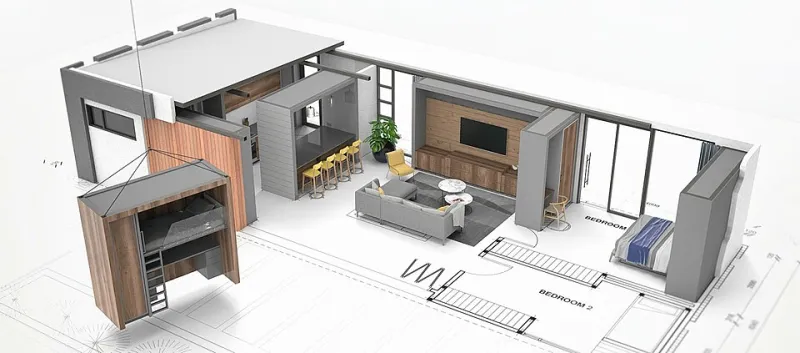
Photo: Raw Module, CC BY-SA 4.0, via Wikimedia Commons
UK construction programmes rarely fail because winter was a surprise. They fail because the season was treated as a general risk rather than a sequence of specific constraints. For modular projects, the factory programme may be largely unaffected by cold and rain, but the site programme is not. Foundations, crane lifts, module connections, envelope sealing, drying and commissioning all have weather thresholds. A winter playbook for 2026–27 should turn those thresholds into planned hold points rather than retrospective explanations.
Understand where modular is exposed
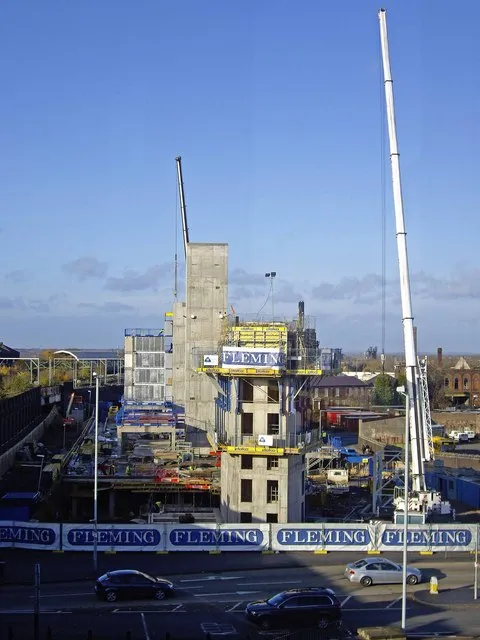
Offsite manufacture removes many wet trades from the critical path, but it does not remove the site interface. Groundworks and drainage remain weather-sensitive. Crane operations are governed by wind speed and ground bearing. Module joints, roof interfaces and service penetrations must be sealed in conditions that suit the specified materials. Internal drying and commissioning can be affected by low temperatures and high humidity. Short daylight reduces the window for lifts, inspections and external works. The practical question is not whether winter will cause delay, but which activities can be moved, protected or held without disrupting the whole sequence.
Groundworks and foundations
Groundworks should be sequenced to get drainage, attenuation and service ducts into the ground before the worst of the weather, with temporary drainage and a defined haul route to keep the site workable. Frost affects formation levels and concrete curing; no pour should proceed on frozen ground, and protection should be planned rather than improvised. Hold points should include verification of ground bearing, inspection of reinforcement and services before pour, and a check that curing protection is in place. On sites with poor drainage, a stone platform and temporary pumping may be needed simply to maintain access for deliveries.
Crane and delivery windows
Crane lifts are the most visible winter risk. Manufacturer wind limits are not negotiable, and ground conditions can change quickly after rain. Delivery slots should be booked with weather contingency, and the lifting plan should identify which modules can be deferred without blocking the site. Short daylight makes early starts valuable, but it also makes pre-lift checks more important. A daily hold point should confirm wind forecast, ground bearing, crane position and exclusion zones before the first lift. If the window closes, the cost of standing down is usually lower than the cost of an unsafe lift.
Envelope sealing and weatherproofing
A module arriving with its envelope complete still has joints, roof interfaces and penetrations to seal on site. Sealants and membranes have temperature limits, and surfaces must be dry. Temporary weather protection should be part of the sequence, not a response to a bad forecast. Hold points should cover joint preparation, sealant application and inspection before internal works are exposed. Where external works are sensitive to rain, a short weather window may be enough if the access and materials are ready in advance.
Drying, services and commissioning
Even a modular building can hold moisture from wet trades, deliveries or temporary exposure. Cold surfaces and high humidity increase condensation risk. Temporary heating, dehumidification and ventilation should be planned as commissioning activities, with moisture readings taken before ceilings, panels or floor finishes are closed. Services commissioning should not be rushed into a cold building at handover; equipment may need stable temperatures, and controls may need time to be set up. A dry, heated building is easier to snag and easier to hand over.
Programme float and sequencing
Winter sequencing works best when weather-sensitive activities are grouped into the better windows and less sensitive work is available as fallback. Offsite manufacture can continue in parallel, but the site team needs a clear look-ahead that distinguishes must-do, can-do and hold activities. Float should be allocated openly rather than hidden in optimistic durations. Daily briefings and a weekly weather review keep the sequence live. The aim is not to pretend that winter has no effect; it is to ensure that the effect lands on planned contingency rather than on handover.
Contract measures for 2026–27
The contract should define what counts as severe weather, how records are kept and how time is dealt with when thresholds are crossed. A blanket weather allowance is less useful than a clear risk allocation with specified hold points, notices and evidence. Site diaries, photographs and Met Office records should be maintained contemporaneously. Where appropriate, a provisional weather contingency can be ring-fenced and managed jointly. The objective is a shared plan for weather risk, not a dispute after the event.
Handover in a cold season
Handover should not be a race to complete snagging before the heating is balanced. Client training, testing and demonstration need a building that is dry, warm and safe. A short period of controlled heating before occupation can prevent condensation and callbacks. The O&M information should record the conditions in which systems were commissioned and any seasonal limitations. A winter handover can be perfectly sound, provided it is planned as the final stage of the sequence rather than an afterthought.
Conclusion
Winter on a UK modular project is a programme condition, not an unavoidable delay. By treating groundworks, crane lifts, envelope sealing, drying and handover as a sequence with defined hold points, clients and contractors can protect the critical path and make better use of the windows that the season does offer. The playbook for 2026–27 should be agreed before the first frost, not written after it.